Selank is a synthetic tuftsin analog developed and registered as a medicine in Russia. Its evidence base is dominated by Russian-language preclinical research and a small number of regional clinical publications. Independent replication is limited, and Selank is not FDA-approved.
Synthetic heptapeptide / tuftsin analog (cognitive & anxiolytic)
Selank
Selank is a synthetic tuftsin analog developed and registered as a medicine in Russia. Its evidence base is dominated by Russian-language preclinical research and a small number of regional clinical publications. Independent replication is limited, and Selank is not FDA-approved.
Research watch: preclinical and limited Russian clinical use
Last reviewed Jul 1, 2026
Next review Jul 29, 2026
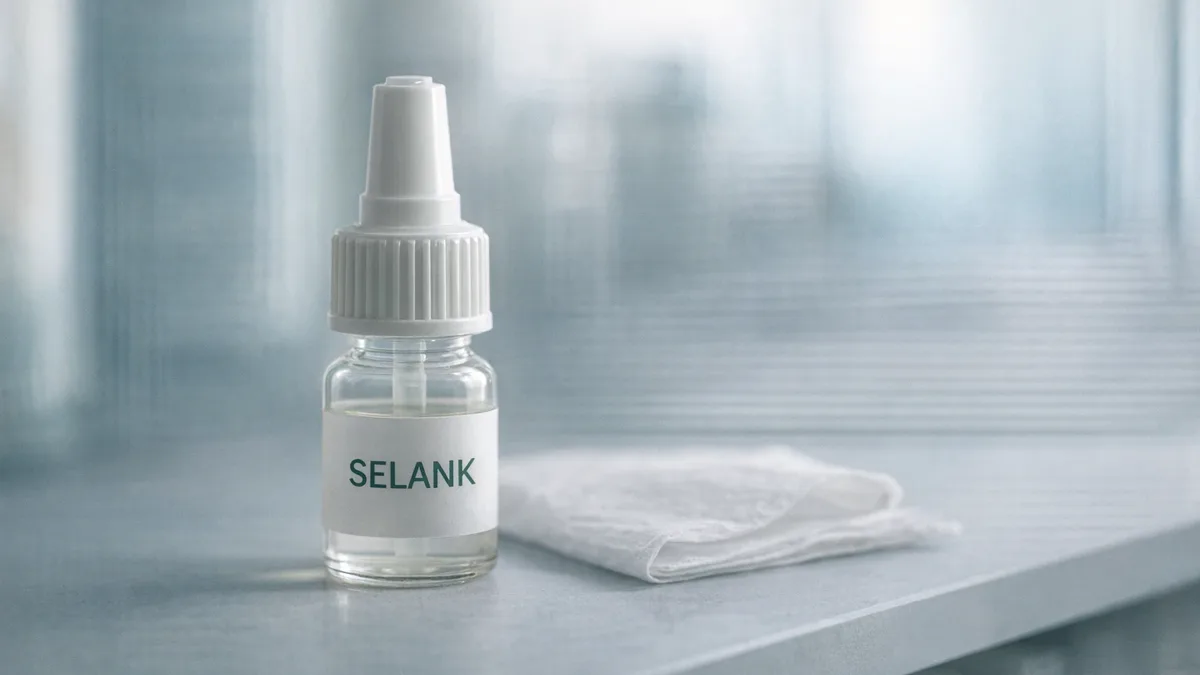
Evidence snapshot
Selank is a tuftsin analog developed at the Institute of Molecular Genetics (Russian Academy of Sciences, Moscow) and registered in Russia as an anxiolytic; it is not FDA-approved.
PubMed-indexed studies are predominantly Russian-language preclinical research in animal models (rats), with limited Russian clinical literature; independent Western clinical trials have not been published.
A 2022 study in Bulletin of Experimental Biology and Medicine found that Selank attenuated aversive signs of morphine withdrawal in rats (PMID 36322304): a preclinical finding with no human replication.
A 2021 review in the Journal of Clinical Pharmacology grouped Selank with other GABAergic sedative-hypnotic agents (flunitrazepam, GHB, phenibut), noting its pharmacological profile but not clinical efficacy data (PMID 34396551).
Research record
What the evidence record says
- Evidence grade
- Not Graded
- Regulatory status
- Selank regulatory status has not been fully reviewed by Peptide Report editorial team. See company profiles and regulatory watch for current status.
Evidence records
Studies, registries, reviews, and regulatory records
Evidence review pending
- Detailed evidence review for Selank is pending editorial assessment. Current summary reflects available public records.
Records: Selank, a Peptide Analog of Tuftsin, Attenuates Aversive Signs of Morphine Withdrawal in Rats., Sedative-Hypnotic Agents That Impact Gamma-Aminobutyric Acid Receptors: Focus on Flunitrazepam, Gamma-Hydroxybutyric Acid, Phenibut, and Selank., Functional Connectomic Approach to Studying Selank and Semax Effects.
Evidence timeline
What changed, and when
Peptide Report last reviewed Selank on 2026-07-01.
Records: Selank, a Peptide Analog of Tuftsin, Attenuates Aversive Signs of Morphine Withdrawal in Rats.
Direct answers
Frequently asked questions
What is Selank?
Selank is a synthetic heptapeptide / tuftsin analog (cognitive & anxiolytic) tracked by Peptide Report. See the full profile for current editorial assessment.
Open research questions
What is still unknown
- What is the complete human evidence base for Selank?
- What are the long-term safety considerations for Selank?
Tracked claims
Selank is an effective anxiolytic with no sedative side effects, as claimed in online peptide communities.
Evidence level: Community discussion
Sources: Selank, a Peptide Analog of Tuftsin, Attenuates Aversive Signs of Morphine Withdrawal in Rats., Sedative-Hypnotic Agents That Impact Gamma-Aminobutyric Acid Receptors: Focus on Flunitrazepam, Gamma-Hydroxybutyric Acid, Phenibut, and Selank.
How to read this: The anxiolytic claim originates from Russian preclinical and clinical literature that has not been independently replicated in Western trials. Online discussions extrapolate animal data and Russian clinical registration to general use. Do not convert these claims into treatment guidance.
Selank is structurally derived from tuftsin and modulates the immune system.
Evidence level: Peer reviewed: preclinical
Sources: Selank, a Peptide Analog of Tuftsin, Attenuates Aversive Signs of Morphine Withdrawal in Rats., Functional Connectomic Approach to Studying Selank and Semax Effects.
How to read this: The tuftsin analog structure is well-established in the peer-reviewed literature. Immunomodulatory effects have been studied in animal models. The functional connectomics study (PMID 32342318) examined brain connectivity changes from Selank/Semax in rats.
Selank is a registered pharmaceutical in Russia for anxiety treatment.
Evidence level: Primary regulatory: Russia only
How to read this: Selank's Russian regulatory registration does not constitute FDA, EMA, or other Western regulatory approval. The 2021 J Clin Pharmacol review (PMID 34396551) references Selank's pharmacological classification but does not provide clinical efficacy data.
Free report
Get the source-quality checklist
Use the same checklist Peptide Report uses to separate Selank claims, source records, supplier documentation, and media signals.
V1 collects email, role, and topic interest only. No medication, health-condition, dosing, or current-use data is collected in this form.
Formspree processes this submission for Peptide Report. Privacy notice.
Sources on this page
Each source record is linked to the claim or evidence note it supports.
Selank, a Peptide Analog of Tuftsin, Attenuates Aversive Signs of Morphine Withdrawal in Rats.
Selank, a Peptide Analog of Tuftsin, Attenuates Aversive Signs of Morphine Withdrawal in Rats.
3 linked pagesOpen original ·
pubmed-selank-morphine-withdrawal-2022Sedative-Hypnotic Agents That Impact Gamma-Aminobutyric Acid Receptors: Focus on Flunitrazepam, Gamma-Hydroxybutyric Acid, Phenibut, and Selank.
Sedative-Hypnotic Agents That Impact Gamma-Aminobutyric Acid Receptors: Focus on Flunitrazepam, Gamma-Hydroxybutyric Acid, Phenibut, and Selank.
4 linked pagesOpen original ·
pubmed-selank-gaba-review-2021Functional Connectomic Approach to Studying Selank and Semax Effects.
Functional Connectomic Approach to Studying Selank and Semax Effects.
4 linked pagesOpen original ·
pubmed-selank-functional-connectomics-2020Related compounds
Dihexa
Dihexa is an angiotensin IV analog studied for effects on the HGF/c-Met signaling system and synapse formation. The revi...
Research watch: preclinical onlyNoopept
Noopept is a synthetic nootropic registered as a medicine in Russia for forms of cognitive impairment. The clinical reco...
Research watch: registered in Russia, sold as supplement in USStay informed