Spermidine is a naturally occurring dietary polyamine involved in cellular processes including autophagy. Animal studies support geroscience interest, while small human trials have explored cognitive outcomes. The clinical findings remain preliminary and do not establish an anti-aging treatment.
Longevity supplement
Spermidine
Spermidine is a naturally occurring dietary polyamine involved in cellular processes including autophagy. Animal studies support geroscience interest, while small human trials have explored cognitive outcomes. The clinical findings remain preliminary and do not establish an anti-aging treatment.
Evidence review
Last reviewed Jul 1, 2026
Next review Jul 29, 2026
Evidence snapshot
The SmartAge randomized clinical trial found that 12 months of spermidine supplementation improved memory performance in older adults with subjective cognitive decline (Schwarz et al., JAMA Netw Open, 2022; Madeo as senior author, University of Graz).
A comprehensive review in Nature Aging described the mechanisms of spermidine-induced autophagy and geroprotection, establishing the mechanistic framework for its longevity effects (Hofer et al., Nat Aging, 2022; Madeo lab, University of Graz).
An earlier randomized controlled trial showed positive effects of spermidine on memory performance in older adults at risk for dementia (Cortex, 2018).
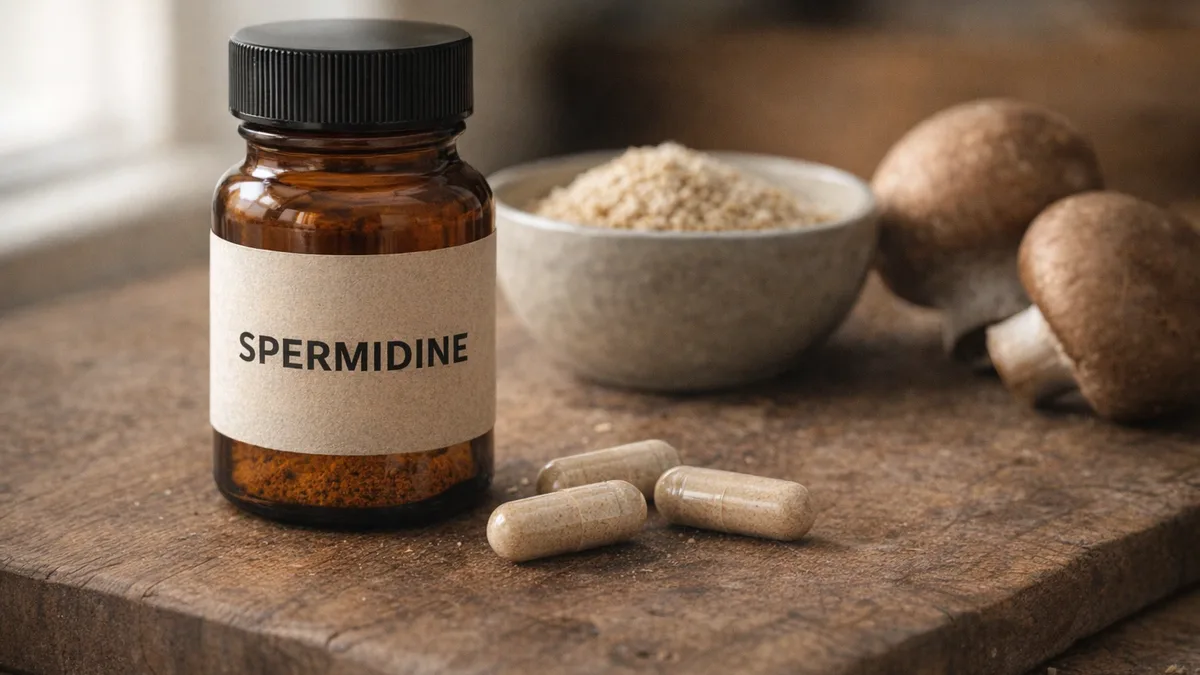
Spermidine is found naturally in wheat germ, aged cheese, soy products, and mushrooms. It is available as a dietary supplement but is not FDA-approved as a drug for any indication.
Research record
What the evidence record says
- Evidence grade
- Not Graded
- Regulatory status
- Spermidine regulatory status has not been fully reviewed by Peptide Report editorial team. See company profiles and regulatory watch for current status.
Evidence records
Studies, registries, reviews, and regulatory records
Evidence review pending
- Detailed evidence review for Spermidine is pending editorial assessment. Current summary reflects available public records.
Records: Effects of Spermidine Supplementation on Cognition and Biomarkers in Older Adults With Subjective Cognitive Decline: A Randomized Clinical Trial, Mechanisms of spermidine-induced autophagy and geroprotection, Spermidine is essential for fasting-mediated autophagy and longevity
Evidence timeline
What changed, and when
Peptide Report last reviewed Spermidine on 2026-07-01.
Direct answers
Frequently asked questions
What is Spermidine?
Spermidine is a longevity supplement tracked by Peptide Report. See the full profile for current editorial assessment.
Open research questions
What is still unknown
- What is the complete human evidence base for Spermidine?
- What are the long-term safety considerations for Spermidine?
Tracked claims
Spermidine induces autophagy and may promote longevity.
Evidence level: Preclinical
Sources: Mechanisms of spermidine-induced autophagy and geroprotection, Spermidine is essential for fasting-mediated autophagy and longevity
How to read this: Autophagy induction is well-established in preclinical models. The Nature Aging review by Hofer/Madeo provides the mechanistic framework. Human longevity outcomes are not yet proven.
Spermidine supplementation may improve cognition in older adults.
Evidence level: Peer reviewed
Sources: Effects of Spermidine Supplementation on Cognition and Biomarkers in Older Adults With Subjective Cognitive Decline: A Randomized Clinical Trial, The effect of spermidine on memory performance in older adults at risk for dementia: A randomized controlled trial
How to read this: The SmartAge trial (JAMA Netw Open, 2022) is the key human study. Results showed memory improvements in subjective cognitive decline but are preliminary. Cite directly and note study limitations.
Spermidine is naturally found in wheat germ, aged cheese, and other foods.
Evidence level: Established
Sources: Spermidine - Wikipedia, Dietary polyamines: spermidine and spermine intake and health implications
How to read this: Dietary sources are well-established. Distinguish between dietary intake and pharmacological supplementation, which may involve different doses and effects.
Free report
Get the source-quality checklist
Use the same checklist Peptide Report uses to separate Spermidine claims, source records, supplier documentation, and media signals.
V1 collects email, role, and topic interest only. No medication, health-condition, dosing, or current-use data is collected in this form.
Formspree processes this submission for Peptide Report. Privacy notice.
Sources on this page
Each source record is linked to the claim or evidence note it supports.
Effects of Spermidine Supplementation on Cognition and Biomarkers in Older Adults With Subjective Cognitive Decline: A Randomized Clinical Trial
Effects of Spermidine Supplementation on Cognition and Biomarkers in Older Adults With Subjective Cognitive Decline: A Randomized Clinical Trial
4 linked pagesOpen original ·
pubmed-spermidine-smartage-2022Mechanisms of spermidine-induced autophagy and geroprotection
Mechanisms of spermidine-induced autophagy and geroprotection
4 linked pagesOpen original ·
pubmed-spermidine-autophagy-geroprotection-2022Spermidine is essential for fasting-mediated autophagy and longevity
Spermidine is essential for fasting-mediated autophagy and longevity
1 linked pageOpen original ·
pubmed-spermidine-fasting-autophagy-2024The effect of spermidine on memory performance in older adults at risk for dementia: A randomized controlled trial
The effect of spermidine on memory performance in older adults at risk for dementia: A randomized controlled trial
2 linked pagesOpen original ·
pubmed-spermidine-memory-dementia-2018Spermidine - Wikipedia
Spermidine - Wikipedia
1 linked pageOpen original ·
wikipedia-spermidineRelated compounds
Metformin
Metformin is an FDA-approved medicine for type 2 diabetes. Longevity interest comes from biological mechanisms, observat...
Evidence reviewNAD+ / NMN / NR
NAD+ is an essential cellular coenzyme, while NR and NMN are precursors marketed for healthy-aging claims. Human studies...
Regulatory watchStay informed