HGH FRAGMENT PEPTIDE (LIPOLYTIC)
AOD-9604
AOD-9604 is a synthetic fragment of human growth hormone developed as a weight-loss candidate. Its Phase 2 obesity program did not meet the ...
CATEGORY
BPC-157, TB-500, and AOD-9604 are widely discussed for recovery, but the supporting records are mostly preclinical, discontinued-development, or regulatory records. This page separates human trial evidence from animal findings and community claims.
Human trial or approved-indication records are available. Read each page for the exact scope and limits.
High. BPC-157 and TB-500 are both on the FDA's July 2026 Pharmacy Compounding Advisory Committee agenda and the FDA bulk substance risk list. AOD-9604 failed Phase 2 clinical trials and was never approved. All three are sold as research-use-only chemicals, and the FDA has issued warning letters to suppliers marketing them beyond that framing.
ALL COMPOUNDS
HGH FRAGMENT PEPTIDE (LIPOLYTIC)
AOD-9604 is a synthetic fragment of human growth hormone developed as a weight-loss candidate. Its Phase 2 obesity program did not meet the ...
RESEARCH PEPTIDE
BPC-157 is an experimental peptide with extensive animal research but very limited human evidence. A Phase 1 registry record has no posted e...
COPPER PEPTIDE
GHK-Cu is a copper-binding tripeptide studied mainly in topical skin contexts. In the reviewed sources, one small randomized human study fou...
RESEARCH PEPTIDE
TB-500 is marketed as a thymosin-beta-4-related recovery peptide. The sources currently linked to this profile are regulatory records, not h...
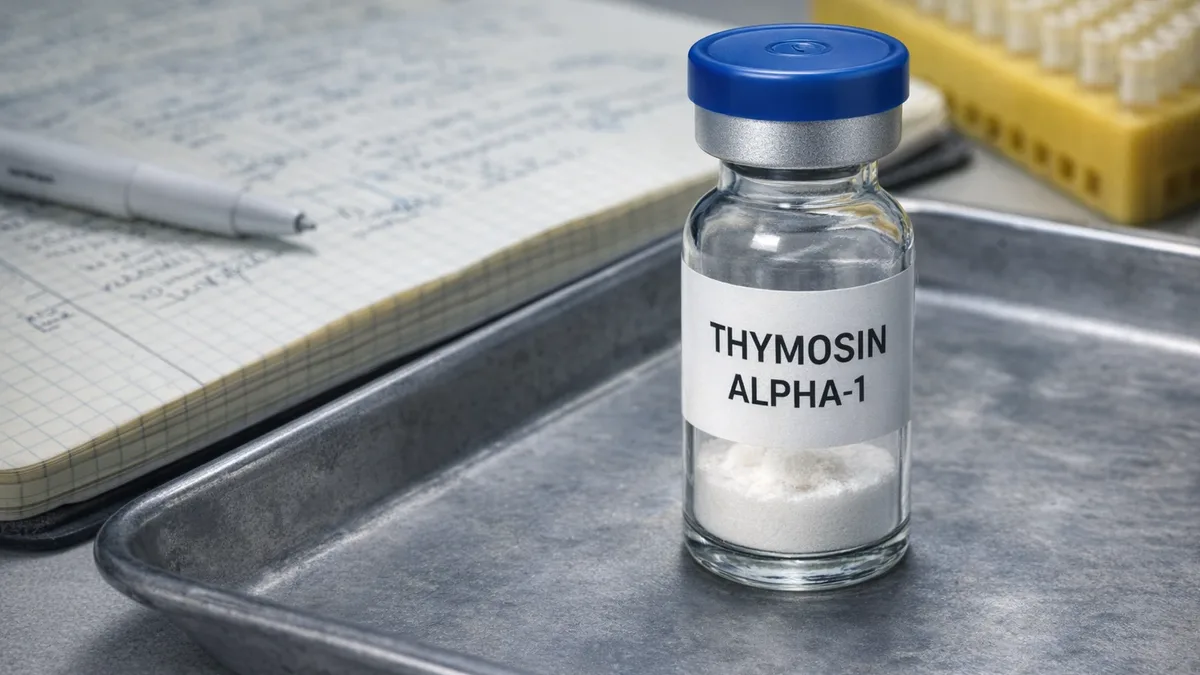
THYMIC PEPTIDE / IMMUNE MODULATOR
Thymosin alpha-1 is an immune-modulating peptide marketed as Zadaxin in several countries. It has been studied across infectious-disease and...